Aztec boy names often carry the atmosphere of ancient Mesoamerica: powerful gods, brilliant celestial bodies, jaguars moving through the night, warriors, artists, rulers, and the sacred rhythms of nature. For parents, writers, gamers, and anyone searching for a name with historical depth, these names can offer something far more memorable than a modern trend.
The word “Aztec” is commonly used for the civilization centered around Tenochtitlan, although the historical people most closely associated with the empire often identified as Mexica. Many names connected with Aztec history and mythology come from Classical Nahuatl, the language of the Mexica and other Nahua peoples.
Some choices, such as Cuauhtémoc, Moctezuma, and Nezahualcóyotl, are strongly connected to historical figures. Others, including Huitzilopochtli, Tezcatlipoca, and Quetzalcóatl, are associated with major deities and religious traditions. Because these names carry genuine cultural and historical significance, it is worth understanding their origins rather than treating them as simply “fantasy names.”
If you’re choosing a name for a baby, a novel, a role-playing character, or a game avatar, the right name should match the personality you imagine. Do you want something powerful and warrior-like? Regal and historical? Mystical and celestial? Or poetic and connected to nature?
This guide helps you explore those choices thoughtfully.
Featured Snippet:
Some powerful Aztec and Nahuatl boy names include Cuauhtémoc, meaning “descending eagle”; Nezahualcóyotl, associated with a fasting coyote; Moctezuma, a historic royal name; Quetzalcóatl, the Feathered Serpent deity; Huitzilopochtli, the Mexica deity associated with war and the sun; and Tlāloc, the rain deity. Meanings and interpretations can vary depending on historical and linguistic sources.
Quick Guide to Aztec-Inspired Boy Names
| Name | General association | Overall vibe |
| Cuauhtémoc | Historical ruler | Noble, powerful |
| Nezahualcóyotl | King and poet | Intellectual, poetic |
| Moctezuma | Historical ruler | Royal, commanding |
| Quetzalcóatl | Feathered Serpent deity | Mythic, celestial |
| Huitzilopochtli | Mexica deity | Warrior, solar |
| Tlāloc | Rain deity | Natural, powerful |
| Tezcatlipoca | Deity associated with night and change | Mysterious, intense |
| Xólotl | Deity associated with transformation | Strange, mystical |
| Axayácatl | Historical ruler | Regal, distinctive |
| Ahuizotl | Historical ruler and mythological creature name | Fierce, memorable |
The Most Powerful Aztec Boy Names
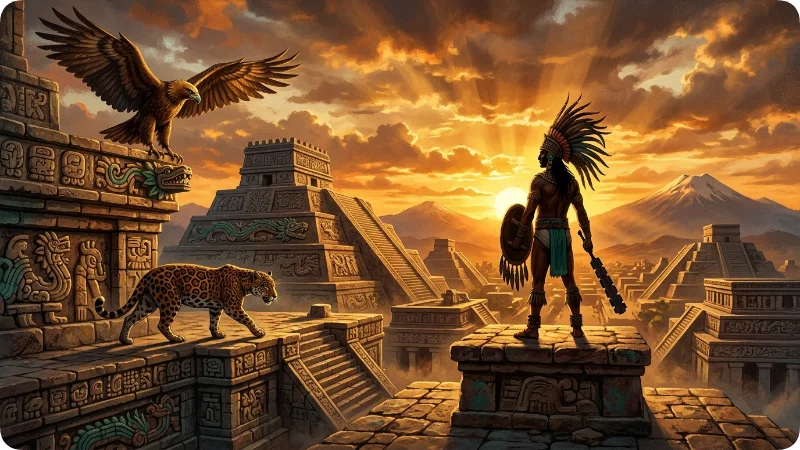
If you want a name with commanding energy, these choices have some of the strongest historical, mythological, or symbolic associations.
Cuauhtémoc
Cuauhtémoc is one of the most recognizable historical names connected with the Mexica world. He was the final Mexica ruler of Tenochtitlan before the city fell to Spanish forces in 1521.
The name is commonly interpreted in connection with a descending eagle. The eagle is especially powerful in Mexica symbolism, and the name therefore carries an unmistakably bold visual identity.
- Origin: Nahuatl
- Pronunciation: Often approximated as kwow-TEH-mok; pronunciation can vary
- Gender: Traditionally masculine
- Vibe: Brave, noble, resilient
- Aesthetic: Warrior, historical, regal
- Social impression: Strong and memorable
- Modern feel: Distinctive and culturally specific
- Similar names: Cuauhtli, Axayácatl, Moctezuma
Naming insight: Cuauhtémoc is a name with serious historical weight. It is an excellent choice for a character connected to leadership, resistance, or resilience, but its cultural importance makes it worth choosing with genuine respect.
Moctezuma
Moctezuma is one of the best-known names in Aztec history, particularly through Moctezuma II, the Mexica ruler encountered during the Spanish conquest.
The name has a strongly royal and historical atmosphere. It sounds dramatic, formal, and immediately connected to the history of Tenochtitlan.
- Origin: Nahuatl
- Pronunciation: Common English approximations vary
- Vibe: Imperial, commanding, historical
- Aesthetic: Royal and ancient
- Social impression: Powerful and memorable
- Similar names: Axayácatl, Cuitláhuac, Cuauhtémoc
For a historical-fiction character, Moctezuma can instantly establish status and political importance.
Axayácatl
Axayácatl was a Mexica ruler and is also associated with the Nahuatl word for a water-related insect or “water face,” depending on the interpretation and context of the source.
Its sound is striking and highly distinctive. The name feels ancient, sophisticated, and unmistakably Mesoamerican.
- Origin: Nahuatl
- Pronunciation: Approximate pronunciations vary
- Vibe: Regal, intellectual, powerful
- Aesthetic: Historical and aristocratic
- Modern impression: Rare and highly distinctive
Cuitláhuac
Cuitláhuac was a Mexica ruler who briefly succeeded Moctezuma II.
The name has a strong historical identity and a dramatic sound. It is particularly suited to historical fiction, educational projects, or characters inspired by the final years of the Mexica empire.
Mythological Aztec Boy Names

These names are connected with major figures from Mexica and broader Nahua religious traditions. Their meanings and associations should be understood within their original cultural context rather than reduced to simple fantasy archetypes.
Quetzalcóatl
Few names connected with Mesoamerican mythology are as famous as Quetzalcóatl, often translated as “Feathered Serpent.”
The name combines quetzal, referring to the brilliantly colored bird, with coatl, meaning serpent or snake in Nahuatl.
Quetzalcóatl is a complex deity with different aspects and traditions across Mesoamerican cultures. The name is associated with ideas including wind, knowledge, creation, and the planet Venus in certain traditions.
- Origin: Nahuatl
- Pronunciation: Often approximated as ket-sal-KOH-atl
- Vibe: Wise, cosmic, mysterious
- Aesthetic: Celestial, mythological, majestic
- Social impression: Unforgettable and intellectually rich
- Modern associations: Fantasy, gaming, mythology, history
This is an exceptionally powerful name for a fictional character, but its religious and cultural significance makes it a particularly meaningful choice.
Huitzilopochtli
Huitzilopochtli was a major Mexica deity associated with war and the sun.
The name is often translated or interpreted in connection with a hummingbird and the left or southern direction, although linguistic interpretations and translations can be complex.
Its sound is intense and unmistakably ancient.
- Vibe: Warrior-like, solar, fierce
- Aesthetic: Mythic and powerful
- Best use: Historical fiction, mythology, gaming, fantasy
- Similar energy: Tezcatlipoca, Tlāloc, Quetzalcóatl
Tlāloc
Tlāloc was a major rain deity in central Mexican religious traditions.
The name has a short, powerful structure and a strong connection with rain, water, fertility, and the natural world.
- Pronunciation: Often approximated as TLAH-lok
- Vibe: Powerful, natural, elemental
- Aesthetic: Stormy, celestial, earthy
- Social impression: Compact and memorable
Tlāloc is an excellent choice if you want a name with enormous mythological significance but a shorter sound than Quetzalcóatl or Huitzilopochtli.
Tezcatlipoca
Tezcatlipoca is one of the most complex and important deities in Nahua religious traditions.
The name is often translated as “Smoking Mirror.” The deity is associated with themes including night, power, conflict, change, and the invisible or unseen.
- Vibe: Dark, mysterious, powerful
- Aesthetic: Gothic, celestial, mythological
- Social impression: Dramatic and intellectually intriguing
- Best use: Fantasy characters, mythology-inspired fiction, gaming
Xólotl
Xólotl is associated with a deity connected to transformation, lightning, fire, and the evening aspect of Venus in some traditions.
The name has a short but unusual sound and a distinctly mysterious atmosphere.
- Pronunciation: Often approximated as SHOH-lohtl
- Vibe: Strange, mystical, transformative
- Aesthetic: Dark fantasy and celestial
- Modern appeal: Shorter than many major deity names
Historical Aztec and Nahuatl Boy Names
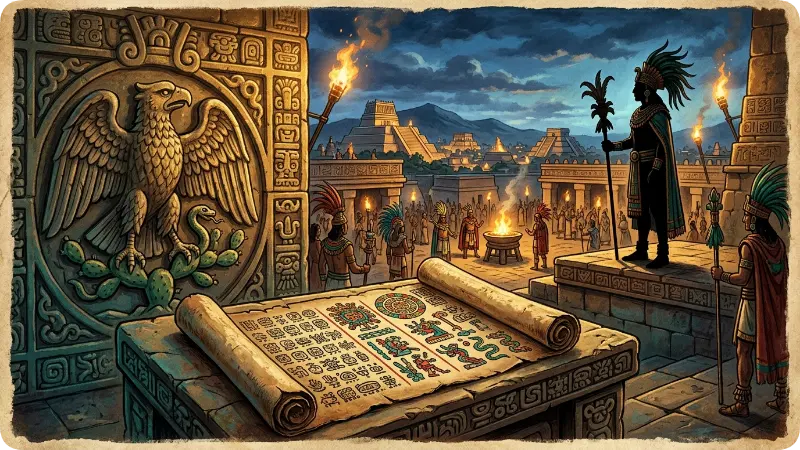
If you want a name connected to a real person rather than a deity, these historical choices offer remarkable depth.
Nezahualcóyotl
Nezahualcóyotl was a ruler of Texcoco, a poet, philosopher, engineer, and important intellectual figure in pre-Columbian central Mexico.
The name is commonly associated with a fasting coyote, although interpretations of Nahuatl names can involve linguistic complexity.
What makes Nezahualcóyotl especially compelling is the contrast between the name’s powerful animal imagery and the historical figure’s reputation as a poet and thinker.
- Origin: Nahuatl
- Vibe: Wise, poetic, philosophical
- Aesthetic: Literary, royal, intellectual
- Cultural association: Texcoco and pre-Columbian central Mexico
- Similar names: Nezahualpilli, Cuauhtémoc
This may be one of the best choices for a character who is both powerful and thoughtful.
Nezahualpilli
Nezahualpilli was a ruler of Texcoco and the son of Nezahualcóyotl.
The name carries a strong dynastic and historical atmosphere. It is ideal for historical fiction or anyone searching for a less commonly encountered name connected with Texcoco’s royal history.
Itzcóatl
Itzcóatl was a Mexica ruler and is commonly translated as “Obsidian Serpent.”
The combination of obsidian and serpent imagery creates an exceptionally strong aesthetic.
- Vibe: Sharp, strategic, powerful
- Aesthetic: Dark luxury, warrior, volcanic
- Visual imagery: Black volcanic glass and serpent symbolism
Itzcóatl is an excellent choice for a character who feels intelligent, formidable, and politically powerful.
Ahuizotl
Ahuizotl was a Mexica ruler. The name is also associated with a creature in Nahua mythology described in traditional sources.
That dual association gives the name a particularly unusual quality: it is simultaneously historical and mythological.
- Vibe: Fierce, mysterious, memorable
- Aesthetic: Dark fantasy and ancient history
- Best use: Historical fiction, fantasy, gaming
Short and Distinctive Aztec-Inspired Boy Names
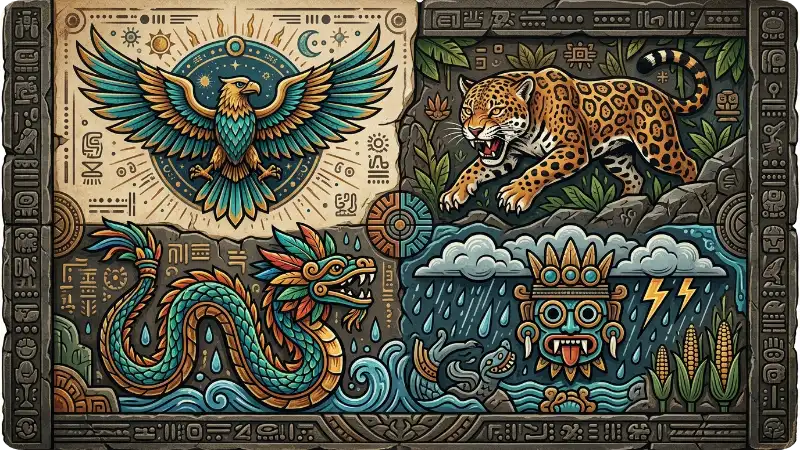
Not everyone wants a long ceremonial name. These options have a more compact sound while retaining strong connections to Nahuatl or Mesoamerican cultural themes.
Ocelotl
Ocelotl is a Nahuatl word associated with the jaguar.
The jaguar was an important symbol in Mesoamerican cultures, including the Mexica world. As a name, Ocelotl feels powerful, wild, and visually unforgettable.
- Pronunciation: Often approximated as oh-seh-LOHTL
- Vibe: Fierce, independent, stealthy
- Aesthetic: Jaguar, warrior, night
Cuauhtli
Cuauhtli is a Nahuatl word associated with an eagle.
The eagle is one of the most recognizable symbols connected with Mexica history and imagery.
- Vibe: Noble, free, courageous
- Aesthetic: Celestial and warrior-like
- Modern appeal: Strong and concise compared with longer historical names
Coatl
Coatl is a Nahuatl word meaning serpent or snake.
It is extremely short and carries strong mythological symbolism, particularly through names such as Quetzalcóatl.
- Vibe: Mysterious and elemental
- Aesthetic: Minimalist, mythological, dark
- Best use: Fictional characters and fantasy settings
Tēcciztli
A Nahuatl word associated with a conch shell, Tēcciztli offers a more unusual nature-based direction.
Its imagery is connected with the sea and shell symbolism, giving it a softer, more elemental feeling than warrior-associated names.
Aztec Boy Names Inspired by Animals and Nature
The natural world was deeply important in Mesoamerican religious, artistic, and cultural traditions. Animal imagery can give a name immediate emotional power.
Ocelotl — Jaguar Energy
The jaguar is one of the strongest animal images in Mesoamerican symbolism.
As a name, Ocelotl feels like midnight forests, stealth, authority, and controlled strength. It suits a character who is powerful without needing to announce it.
Cuauhtli — Eagle Spirit
Cuauhtli has a completely different energy.
Where Ocelotl feels nocturnal and grounded, Cuauhtli feels elevated, open, and visionary. It suggests height, freedom, courage, and a broad perspective.
Coatl — Serpent Symbolism
Coatl is more mysterious and transformative.
Serpent imagery can evoke renewal, movement, hidden knowledge, and the natural world. In a fictional setting, it works beautifully for a character connected to magic or ancient wisdom.
Tlāloc — Rain and Storm Energy
Tlāloc brings the power of water and weather.
It is a strong choice for someone searching for a name with storm, rain, fertility, and elemental associations.
Aztec Boy Names by Personality and Aesthetic
Choosing by personality is often easier than choosing from a long alphabetical list.
| Personality or aesthetic | Names to consider |
| Brave and warrior-like | Cuauhtémoc, Huitzilopochtli, Itzcóatl |
| Wise and intellectual | Nezahualcóyotl, Nezahualpilli |
| Royal and commanding | Moctezuma, Axayácatl, Cuitláhuac |
| Mystical and mysterious | Tezcatlipoca, Xólotl, Coatl |
| Nature-loving | Tlāloc, Ocelotl, Cuauhtli |
| Dark and dramatic | Itzcóatl, Tezcatlipoca, Ahuizotl |
| Poetic and philosophical | Nezahualcóyotl |
| Fantasy-inspired | Quetzalcóatl, Xólotl, Ocelotl |
| Short and striking | Coatl, Tlāloc, Cuauhtli |
Choosing the Right Aztec Boy Name
The best name depends on what you want the name to communicate.
For a powerful historical character
Choose Cuauhtémoc, Moctezuma, Itzcóatl, Axayácatl, or Cuitláhuac.
These names immediately suggest leadership, political history, and the world of pre-Columbian central Mexico.
For a poetic or intellectual personality
Nezahualcóyotl is an especially compelling choice because of the historical figure’s association with poetry, philosophy, engineering, and leadership.
For a mythological or fantasy character
Consider Quetzalcóatl, Tezcatlipoca, Xólotl, or Huitzilopochtli.
These names have enormous mythological depth, but they should be used with awareness that they represent important religious figures rather than invented fantasy characters.
For a short, bold name
Tlāloc, Coatl, Cuauhtli, and Ocelotl offer compact options with powerful imagery.
A note about pronunciation
Many Nahuatl names may be unfamiliar to English-speaking readers. Before choosing one for a baby or public-facing character, listen to reliable pronunciation resources or consult a speaker familiar with Nahuatl pronunciation.
Pronunciation can vary because Nahuatl has multiple modern varieties, and historical pronunciation is not always perfectly recoverable.
A note about “lucky” attributes
There is no universal historical system that assigns every ancient Aztec or Nahuatl name a scientifically verified lucky number, color, gemstone, weekday, or zodiac sign.
For that reason, any such associations should be treated as modern symbolic or entertainment-based interpretations, not authentic ancient facts.
For example, someone might personally associate Cuauhtli with the color gold because of eagle imagery, or Tlāloc with blue because of rain and water. These are modern aesthetic interpretations rather than universal traditional rules.
FAQs About Aztec Boy Names
What is the most famous Aztec boy name?
Quetzalcóatl is probably one of the most internationally recognized names associated with Mesoamerican mythology. Moctezuma and Cuauhtémoc are also among the best-known historical names connected with the Mexica world.
What is a strong Aztec name for a boy?
Strong options include Cuauhtémoc, Itzcóatl, Huitzilopochtli, Ocelotl, and Cuauhtli. Their strength comes from associations with rulers, warriors, eagles, jaguars, deities, and powerful natural imagery.
What Aztec boy name means eagle?
Cuauhtli is a Nahuatl word associated with an eagle. Cuauhtémoc is commonly interpreted in connection with a descending eagle, although translations of historical Nahuatl names can involve linguistic nuance.
What Aztec boy name means jaguar?
Ocelotl is a Nahuatl word associated with the jaguar. The jaguar has important symbolic associations across Mesoamerican cultures and is often connected with power, night, and warrior imagery.
Are Aztec names the same as Nahuatl names?
Not exactly. “Aztec” is a broad term commonly used for the civilization centered around the Mexica empire, while Nahuatl refers to a language group with multiple varieties spoken by different Nahua peoples. Many names associated with the Mexica world are from Nahuatl, but the terms should not be treated as exact synonyms.
Conclusion
The best Aztec boy names are not simply unusual combinations of sounds. Many carry connections to real rulers, major deities, powerful animals, natural forces, poetry, philosophy, and the history of central Mexico.
For a regal name, explore Moctezuma, Axayácatl, or Cuauhtémoc. If you want something poetic and intellectual, Nezahualcóyotl stands apart. For mythological energy, Quetzalcóatl, Tlāloc, Tezcatlipoca, and Xólotl offer extraordinary depth. Meanwhile, Ocelotl, Cuauhtli, and Coatl create shorter, more visually striking choices.
A meaningful name deserves more than a quick definition. Think about how it sounds, what imagery it creates, how easily others can pronounce it, and whether its cultural history matches the way you intend to use it.
When chosen with understanding and respect, a name inspired by the Mexica and broader Nahua world can feel powerful, memorable, and deeply connected to history.

I am Nora Whitfield, a dedicated Name Researcher and Content Writer at NamesHorizon.com. I create well-researched content on name meanings, origins, trends, and naming inspiration, helping readers discover names that are both meaningful and memorable. nameshorizon.com