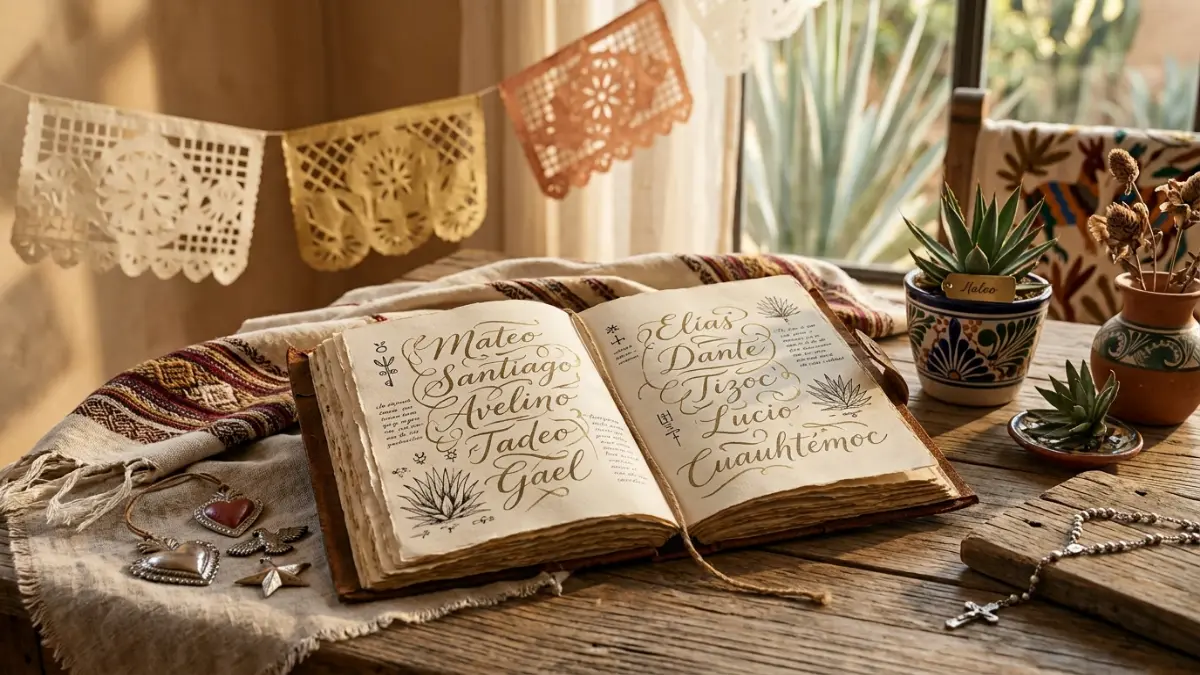
A name can carry a place with it. It can sound like family, history, sunshine, old streets, ancient languages, or a story passed down through generations.
That is part of what makes choosing unique Mexican boy names so special. Mexico’s naming traditions draw from Spanish, Indigenous languages, Catholic heritage, regional customs, and modern international influences. Some names feel unmistakably Mexican, while others connect Mexico’s present with its deep pre-Hispanic history.
If you want a name that feels distinctive without sounding randomly invented, the key is to look beyond popularity lists. A meaningful Nahuatl name, an uncommon Spanish classic, or a name connected to Mexican history can all offer individuality in very different ways.
This guide brings together names with authentic cultural or linguistic connections and explains what makes each one stand out.
Quick Answer: What Are Some Unique Mexican Boy Names?
Some distinctive Mexican boy names include Cuauhtémoc, Nezahualcóyotl, Xólotl, Ocelotl, Itzcóatl, Tenoch, Axayácatl, Yaotl, Emiliano, Amado, Aurelio, Leandro, Aureliano, and Nicanor.
The most unusual choices often come from Indigenous Mexican languages such as Nahuatl, while uncommon Spanish names can provide a distinctive option that is easier to pronounce internationally.
What Makes a Mexican Boy Name Unique?
“Mexican” does not describe one single naming tradition.
A boy born in Mexico might have a Spanish first name, an Indigenous name, a Biblical name, a family surname used as a given name, or a combination reflecting several generations of cultural influence.
For that reason, a unique Mexican boy name can mean different things to different families.
You might want:
- An Indigenous Mexican name with historical depth
- A rare Spanish-language classic
- A name associated with Mexican history
- A modern name that feels natural in Mexico
- A strong name inspired by Nahuatl vocabulary
- A distinctive first name that works internationally
- A meaningful middle name with Mexican heritage
- A name that sounds traditional without feeling old-fashioned
One important distinction is worth remembering: a name’s origin and its use in Mexico are not always the same thing.
For example, a Spanish name may not have originated in Mexico, but it can still be deeply established within Mexican naming culture. Likewise, an Indigenous name can have centuries of history in Mesoamerica even though it may be uncommon in everyday modern naming.
Unique Mexican Boy Names at a Glance
| Name | Cultural or linguistic connection | Meaning / association | Overall feel |
| Cuauhtémoc | Nahuatl | Descending or swooping eagle | Powerful, historic |
| Nezahualcóyotl | Nahuatl | Fasting coyote | Regal, intellectual |
| Xólotl | Nahuatl | Name associated with a deity and the dog | Mythic, unusual |
| Itzcóatl | Nahuatl | Obsidian serpent | Dark, strong |
| Ocelotl | Nahuatl | Jaguar | Wild, bold |
| Yaotl | Nahuatl | Warrior/enemy | Fierce, compact |
| Tenoch | Nahuatl | Historic name associated with Tenochtitlan | Ancient, distinctive |
| Axayácatl | Nahuatl | Water-face / water-related etymology | Rare, historical |
| Iztac | Nahuatl | White | Minimalist, striking |
| Emiliano | Spanish/Mexican usage | Related to Emil and Aemilianus | Warm, historic |
| Amado | Spanish | Beloved | Romantic, gentle |
| Aurelio | Spanish/Latin | Golden, gilded | Elegant, vintage |
| Aureliano | Spanish/Latin | Golden, gilded | Literary, refined |
| Leandro | Spanish/Greek | Lion-man | Classic, uncommon |
| Nicanor | Spanish/Greek | Victory of the people | Traditional, distinctive |
| Evaristo | Spanish/Greek | Well-pleasing | Vintage, uncommon |
The meanings above refer to established linguistic or historical associations where applicable. The style descriptions are modern interpretations rather than claims about a person’s personality.
Rare Indigenous Mexican Boy Names

For families specifically looking for a name connected to Mexico’s Indigenous heritage, Nahuatl names offer some of the most distinctive possibilities.
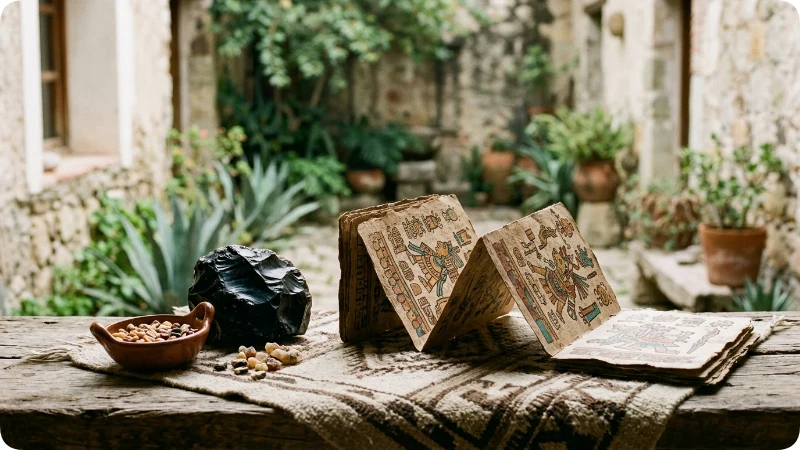
Nahuatl was historically spoken across central Mexico and remains a living language today in several regional varieties. Historical spellings and modern forms can differ, so it is worth checking the preferred spelling and pronunciation with a reliable cultural or linguistic source before using a name.
Cuauhtémoc
Origin: Nahuatl
Pronunciation: roughly kwow-TEH-mok in common English approximations
Association: A historical Mexica ruler
Cuauhtémoc is one of the strongest choices for parents seeking a name with unmistakable historical depth.
The name is commonly interpreted in relation to a descending or swooping eagle. Its most famous historical association is Cuauhtémoc, the last Mexica ruler of Tenochtitlan before the Spanish conquest.
It feels powerful without being artificially modern.
Vibe: commanding, historic, courageous, dignified
Aesthetic: ancient, regal, strong
Nickname possibilities: Cuau, Temoc
Modern feel: rare and culturally significant
Sibling pairings: Mateo, Santiago, Xólotl, Amado
Nezahualcóyotl
Origin: Nahuatl
Pronunciation: approximately neh-sah-wal-KOY-otl
Meaning: Commonly translated as “fasting coyote”
Nezahualcóyotl is a particularly rich choice because it connects naming with Mexican history, poetry, philosophy, and leadership.
Nezahualcóyotl was a 15th-century ruler of Texcoco and is also remembered as a poet and thinker. His name therefore carries associations far beyond its literal translation.
Vibe: intellectual, artistic, dignified
Aesthetic: literary, ancient, sophisticated
Nicknames: Neza
Modern feel: highly distinctive
Best for: families wanting a historically meaningful full name
The name is long and pronunciation may require explanation outside Mexico, which can be either a charming feature or a practical consideration.
Xólotl
Origin: Nahuatl
Pronunciation: approximately SHO-lohtl
Cultural association: Xólotl is a figure in Mexica mythology
Xólotl has a striking sound and a strong mythological connection.
The name is associated with a deity represented in several ways within Mexica traditions, including connections with dogs and the evening star. Because it is also the name of a culturally significant mythological figure, it should be chosen with awareness of that context rather than treated simply as a fantasy name.
Vibe: mysterious, mythic, unconventional
Aesthetic: celestial, ancient, dark
Modern appeal: exceptionally distinctive
Best use: first name or meaningful middle name
Itzcóatl
Origin: Nahuatl
Pronunciation: approximately eets-KO-atl
Meaning: Commonly translated as “obsidian serpent”
Itzcóatl has an immediately dramatic quality.
Obsidian was an important material in ancient Mesoamerica, while the serpent is a recurring and significant image in Mesoamerican cultures. The name also belongs to a major historical ruler of the Mexica.
Vibe: powerful, mysterious, warrior-like
Aesthetic: dark luxury, ancient, dramatic
Nickname: Itz
Modern appeal: rare and memorable
Itz can also make the full name easier to use casually without replacing its cultural form.
Ocelotl
Origin: Nahuatl
Meaning: Jaguar
Ocelotl is a compelling option for parents who love animal-inspired names but want something with a genuine Indigenous Mexican linguistic connection.
The jaguar held major symbolic and cultural importance in Mesoamerica, including associations with strength and elite warrior traditions.
Vibe: fierce, confident, untamed
Aesthetic: nature, warrior, wild
Nickname: Ocel
Style: bold and unmistakable
Yaotl
Origin: Nahuatl
Common association: Warrior or enemy
Yaotl is much shorter than many historical Nahuatl names, making it interesting for parents who want an Indigenous name without a long pronunciation challenge.
Its sound is compact and modern even though its linguistic roots are old.
Vibe: strong, energetic, fearless
Aesthetic: minimalist, warrior, edgy
Modern appeal: high for families seeking a short unusual name
More Distinctive Nahuatl and Historical Names
Some historical names are especially unusual today. Their cultural context matters, so they are best researched carefully before use.
Tenoch
Tenoch is strongly associated with the early history of Tenochtitlan and the Mexica tradition.
It has a compact sound compared with names such as Nezahualcóyotl, making it easier to imagine in modern everyday use.
Vibe: ancient, grounded, distinctive
Style: minimalist historical
Axayácatl
Origin: Nahuatl
Historical association: Mexica ruler
Axayácatl is another historically significant name associated with the Mexica empire.
Its pronunciation is more challenging for many English speakers, but that can be part of its appeal for families specifically seeking a rare heritage name.
Vibe: aristocratic, ancient, commanding
Style: historical and ceremonial
Iztac
Origin: Nahuatl
Meaning: White
Iztac offers a completely different feeling from the longer warrior and ruler names.
Short, clean, and visually striking, it can work well for parents who prefer minimalist names.
Vibe: quiet, crisp, pure
Aesthetic: minimalist, natural, modern
Unique Spanish Boy Names Used in Mexico
Not every unique Mexican boy name needs an Indigenous origin.
Spanish-language names have been part of Mexican naming traditions for centuries. Some classic names are now uncommon enough to feel fresh again, especially as vintage names return to modern naming.
Amado
Origin: Spanish, from Latin
Meaning: Beloved
Amado is one of those names that carries its emotional quality directly in its meaning.
It feels warm rather than flashy, making it especially appealing as a first or middle name.
Vibe: affectionate, artistic, romantic
Aesthetic: vintage, soft, elegant
Nicknames: Ama, Mado
Aurelio
Origin: Spanish, from Latin
Meaning: Golden or gilded
Aurelio has an elegant old-world sound without being as common as many familiar Spanish names.
It works particularly well for parents looking for something refined and distinctive.
Vibe: polished, warm, sophisticated
Aesthetic: vintage luxury
Nicknames: Auri, Lio
Aureliano
Origin: Spanish, from Latin
Meaning: Golden or gilded
Aureliano has a literary quality for many readers because of its association with Gabriel García Márquez’s One Hundred Years of Solitude, where several characters bear the name Aureliano.
That literary connection can give the name an artistic and intellectual impression.
Vibe: literary, sophisticated, mysterious
Aesthetic: vintage, literary, Latin American
Nickname: Aure, Liano
Leandro
Origin: Spanish form of Greek Leandros
Meaning: Commonly connected with “lion-man”
Leandro feels familiar enough to pronounce while remaining less expected than many mainstream choices.
Vibe: romantic, confident, classic
Aesthetic: Mediterranean, vintage, elegant
Nicknames: Leo, Lean
Nicanor
Origin: Spanish, from Greek
Meaning: Commonly interpreted as “victory of the people”
Nicanor has an unmistakably traditional sound.
For parents interested in old-fashioned names that have room to feel new again, it offers a strong alternative to more predictable classics.
Vibe: dignified, intellectual, traditional
Aesthetic: vintage revival
Evaristo
Origin: Spanish, from Greek
Meaning: Commonly associated with “well-pleasing”
Evaristo is considerably less familiar to many English-speaking audiences.
Its long form gives it a formal quality, while a family can choose a shorter nickname if desired.
Vibe: refined, old-world, distinctive
Aesthetic: vintage European/Spanish
Strong Mexican Boy Names With a Powerful Feel

If your ideal name should sound bold, commanding, or memorable, consider names with historical, warrior, royal, or animal associations.
| Name | Strong association | Style |
| Cuauhtémoc | Historical ruler and eagle imagery | Regal |
| Itzcóatl | Obsidian serpent | Dark and powerful |
| Ocelotl | Jaguar | Wild and bold |
| Yaotl | Warrior-related meaning | Fierce |
| Nezahualcóyotl | Ruler, poet, philosopher | Intellectual power |
| Axayácatl | Mexica ruler | Historic |
| Emiliano | Strong Mexican historical association | Warm and patriotic |
| Aurelio | Golden imagery | Refined strength |
Emiliano deserves special attention here. It is not an Indigenous Mexican name, but its strong association with Mexican history comes through figures such as revolutionary leader Emiliano Zapata.
That historical connection gives the name a distinctly Mexican resonance without making it difficult to pronounce.
Soft and Elegant Mexican Boy Names

Not every distinctive name needs to sound powerful.
Some parents want something gentle, artistic, warm, or sophisticated.
Amado
“Beloved” gives Amado an immediately affectionate quality.
Aurelio
The “golden” meaning creates a warm, luminous impression.
Leandro
Its connection with the lion gives it underlying strength while its sound remains smooth and romantic.
Emiliano
Long, melodic, and familiar across Spanish-speaking communities, Emiliano has a softer rhythm than many strongly historical names.
Aureliano
Its literary connections make it especially attractive for families who enjoy books, storytelling, and old-fashioned names.
These descriptions are aesthetic interpretations, not claims that children with these names will develop particular personalities.
Short and Unusual Mexican Boy Names
Short names can be especially useful when the surname is long.
They are also easier to call across a playground, write on forms, and use internationally.
Consider:
- Itz
- Itzac / Itzcoatl-related forms should be checked carefully before use
- Yaotl
- Iztac
- Tenoch
- Amado
- Aurelio
- Ocelotl
For culturally specific names, however, shortening should not automatically replace the original form. A nickname is a family choice; it does not change the historical or linguistic identity of the full name.
Mexican Boy Names Inspired by History
Historical associations can make a name feel meaningful without requiring an invented symbolism.
Cuauhtémoc
Associated with the final Mexica ruler of Tenochtitlan, Cuauhtémoc has an exceptionally strong historical identity.
Nezahualcóyotl
Associated with the ruler of Texcoco remembered for poetry, philosophy, and cultural achievements.
Itzcóatl
Associated with a major Mexica ruler and the name’s “obsidian serpent” interpretation.
Emiliano
Strongly associated with Emiliano Zapata, one of the best-known figures of the Mexican Revolution.
Aureliano
Not specifically a Mexican historical name, but its literary association with García Márquez makes it particularly recognizable within Latin American literary culture.
When choosing a historically connected name, it is useful to distinguish the history of the person who carried it from the literal meaning of the name itself. Both can matter, but they are different kinds of significance.
Mexican Boy Names With Nature and Animal Connections
Nature can make a name feel vivid without relying on modern invented meanings.
Ocelotl — Jaguar
One of the clearest examples of a Mexican Indigenous name with an animal meaning.
Its sound is unusual, while its imagery is immediately memorable.
Iztac — White
A simple color-based meaning creates a clean, understated aesthetic.
Xólotl — Mythological and canine associations
Xólotl has a more complex cultural background and should be understood within Mexica mythology rather than treated simply as a “dog name.”
Cuauhtémoc — Eagle imagery
The name is commonly interpreted through eagle-related imagery, while its historical association adds another layer of meaning.
Unique Mexican Boy Names by Personality Vibe
A name cannot determine personality, but its sound and cultural associations can create a particular first impression.
| Desired impression | Names to explore |
| Strong and commanding | Cuauhtémoc, Itzcóatl, Yaotl |
| Intellectual and literary | Nezahualcóyotl, Aureliano |
| Wild and adventurous | Ocelotl, Xólotl |
| Warm and affectionate | Amado, Emiliano |
| Elegant and polished | Aurelio, Leandro |
| Ancient and mysterious | Tenoch, Itzcóatl, Xólotl |
| Short and minimalist | Iztac, Yaotl |
| Traditional and uncommon | Nicanor, Evaristo |
These are style impressions, not predictions about the child.
Unique Mexican Boy Names for a Modern Baby
A name can have ancient roots and still feel surprisingly modern.
This is particularly true when the name is short or has an easy nickname.
For example:
Itzcóatl → Itz
Nezahualcóyotl → Neza
Aurelio → Auri or Lio
Aureliano → Liano
Leandro → Leo
Amado → Mado
This gives parents two naming experiences: a culturally rich formal name and a practical everyday version.
However, be careful with automatically shortening Indigenous names simply to make them more familiar to English-speaking audiences. The full form may be an important part of the name’s cultural identity.
How to Choose a Unique Mexican Boy Name
A beautiful name on a list can feel completely different once you imagine using it every day.
Before deciding, test the name in real situations.
Say the Full Name Aloud
Say the first, middle, and last name together.
Try it:
“This is ___.”
Then imagine saying it quickly.
A name that looks beautiful on a screen may have a very different rhythm when spoken.
Check the Pronunciation
This is especially important with Nahuatl names.
Do not rely entirely on an English pronunciation guide. Nahuatl has multiple regional varieties, and pronunciation can vary.
If cultural authenticity is important to your family, verify the pronunciation with a reliable speaker, linguistic resource, or cultural source.
Think About Nicknames
Ask whether you want:
- A name that naturally shortens
- A formal name that remains complete
- A short name with no obvious nickname
- A name with several family nickname possibilities
For example, Aurelio can naturally inspire shorter forms such as Lio, while Yaotl already has a compact structure.
Consider the Surname
Long Indigenous names can create a beautiful contrast with short surnames.
A long first name may also pair well with a short middle name.
For example:
Nezahualcóyotl Cruz
Cuauhtémoc Reyes
Aureliano Díaz
The best combination depends on the actual family surname and pronunciation.
Think About Cultural Connection
If you are choosing an Indigenous Mexican name, learn more than its dictionary translation.
Ask:
- Which language does it come from?
- Is it still spoken today?
- Is the name historically documented?
- Is the spelling modern or historical?
- How is it pronounced in the relevant language?
- Does the name have a religious or mythological context?
- Is the name traditionally used as a personal name?
That extra research turns a “unique” name into an informed naming choice.
Should You Choose an Indigenous Mexican Name?
An Indigenous Mexican name can be deeply meaningful, particularly when there is a genuine family, cultural, linguistic, or educational connection.
But uniqueness alone is not a reason to treat an Indigenous language as a collection of fascinating-sounding words.
Names such as Nezahualcóyotl, Cuauhtémoc, Itzcóatl, and Ocelotl have historical and cultural contexts that deserve respect.
If you do not have a personal connection to the tradition, learning the name’s history and pronunciation before using it is a thoughtful step.
The goal is not simply to find the rarest name.
It is to understand the name well enough to use it respectfully.
Mexican Boy Names With Lucky Numbers and Symbolism
Lucky numbers, gemstones, colors, days, zodiac signs, and numerology are sometimes attached to names on baby-name websites.
These associations should be treated as traditional, cultural, or entertainment-based interpretations, not scientific facts.
A name does not objectively possess a lucky number or determine a child’s future.
For example, you might personally associate Ocelotl with jungle greens, Aurelio with gold, or Iztac with white because of the name’s imagery. Those are aesthetic interpretations rather than verified properties of the names.
For culturally specific names, it is better to preserve documented meaning and history than to manufacture a “lucky” profile.
Modern, Classic, or Ancient: Which Style Fits?
One useful way to narrow your list is to decide how old you want the name to feel.
Modern
Choose a name with an easy rhythm, simple spelling, or nickname potential.
Examples:
Emiliano, Aurelio, Leandro, Amado
Classic
Look for established Spanish names that have survived across generations.
Examples:
Aurelio, Leandro, Nicanor, Evaristo
Ancient
For a much stronger historical identity, explore names connected to pre-Hispanic Mexico.
Examples:
Cuauhtémoc, Nezahualcóyotl, Itzcóatl, Xólotl, Ocelotl, Yaotl
Literary
If books and storytelling are part of your family’s identity, Aureliano stands out because of its connection to Gabriel García Márquez’s One Hundred Years of Solitude.
The important point is that “unique” does not have to mean strange. A name can be rare because it is historically rich, regionally specific, vintage, or simply overlooked.
The Most Distinctive Choices in This List
If your goal is maximum individuality, these names stand apart for different reasons.
Nezahualcóyotl — exceptionally historical and literary
Cuauhtémoc — powerful historical identity
Itzcóatl — dramatic meaning and sound
Ocelotl — striking animal connection
Xólotl — mythological depth
Yaotl — short and warrior-associated
Iztac — simple and minimalist
Tenoch — compact historical name
Aureliano — literary and vintage
Evaristo — uncommon Spanish classic
Rather than choosing the name that looks rarest on paper, consider which one gives you the strongest combination of meaning, cultural connection, pronunciation, family fit, and everyday usability.
FAQs
What is a rare Mexican boy name?
Rare Mexican boy names can include historically significant Indigenous names such as Cuauhtémoc, Nezahualcóyotl, Itzcóatl, Ocelotl, and Yaotl, as well as uncommon Spanish names such as Aureliano, Nicanor, and Evaristo.
What is a strong Mexican boy name?
Names such as Cuauhtémoc, Itzcóatl, Ocelotl, and Yaotl have strong historical, linguistic, or animal associations. Emiliano also has a notable Mexican historical association through Emiliano Zapata.
What are unique Indigenous Mexican boy names?
Some distinctive Indigenous Mexican names include Cuauhtémoc, Nezahualcóyotl, Itzcóatl, Ocelotl, Xólotl, Yaotl, Tenoch, and Iztac. Many of these are connected to Nahuatl and pre-Hispanic Mexican history.
Is Nezahualcóyotl a Mexican boy name?
Yes. Nezahualcóyotl is a historically documented Nahuatl name associated with the ruler of Texcoco who is also remembered as a poet and thinker. The name is commonly translated as “fasting coyote.”
What Mexican boy names mean something powerful?
Ocelotl is associated with the jaguar, while Itzcóatl is commonly translated as “obsidian serpent.” Cuauhtémoc is associated with an eagle and a major historical ruler.
Are Mexican boy names always Spanish?
No. Mexican naming culture includes Spanish-language names as well as names from Indigenous languages, including Nahuatl and many other Indigenous languages spoken in Mexico. Mexico’s naming landscape is culturally diverse.
What should I check before choosing an Indigenous Mexican name?
Check the original language, documented meaning, pronunciation, spelling, historical context, and present-day usage. This is particularly important when a name comes from a living Indigenous language or has a mythological or ceremonial connection.
Final Thoughts
The most memorable Mexican boy names unique to your family do not necessarily need to be the strangest names you can find.
Sometimes individuality comes from an ancient Nahuatl name such as Cuauhtémoc or Ocelotl. Sometimes it comes from rediscovering an uncommon Spanish classic such as Aurelio, Aureliano, or Nicanor. And sometimes the perfect name is the one that connects your family’s history with the sound you want your child to carry into the future.
Look beyond rarity.
Listen to the pronunciation. Learn the history. Consider the surname. Imagine the nickname. Most importantly, understand the cultural meaning before making the name part of your family’s story.
A truly meaningful name does more than stand out.
It gives a child something worth carrying