Some names carry the warmth of sunlight, while others feel darker, older, and more mysterious. If you are searching for male names that mean death, you may be drawn to something deeper than a simple definition—a name connected with mortality, the underworld, endings, transformation, or the mysterious boundary between life and death.
The important thing is that these meanings are not all the same. A few names, such as Mṛtyu, Mors, and Thanatos, have direct linguistic or mythological connections to death. Others, including Yama, Anubis, Hades, and Osiris, are better understood as names of figures associated with death, judgment, burial, or the afterlife.
That distinction matters when choosing a real baby name, character name, pen name, gaming identity, or fantasy name.
This guide brings together the strongest options, explains their origins and associations, and helps you decide whether you want a name that literally means death, quietly evokes mortality, or simply carries a dark and powerful atmosphere.
Quick Answer: Male Names Connected to Death
The strongest male names associated with death include Mṛtyu, Yama, Thanatos, Mors, Mot, Azrael, Samael, Anubis, Hades, Osiris, Nergal, Orcus, Arawn, and Mortimer.
However, they do not all literally mean “death.” Mṛtyu is the closest direct Sanskrit term for death, while Thanatos is the Greek personification of death. Names such as Yama, Anubis, and Hades are associated with death and the afterlife through mythology rather than having “death” as their ordinary lexical meaning.
Male Names That Literally or Directly Mean Death
When accuracy matters, it helps to start with the smallest group: names or name forms whose linguistic or mythological connection to death is especially direct.
| Name | Origin | Death connection | Feel |
| Mṛtyu | Sanskrit | Death; personified death in Hindu tradition | Ancient, intense |
| Thanatos | Greek | Personification of death | Mythic, dramatic |
| Mors | Latin | Death; Roman personification/concept | Stark, classical |
| Mot | Northwest Semitic | Death/deity of death in Ugaritic tradition | Ancient, severe |
| Yama | Sanskrit/Pali | Lord or judge of the dead in Indian traditions | Sacred, powerful |
| Antaka | Sanskrit | “Ender,” an epithet associated with death/Yama | Ancient, forceful |
| Kāla | Sanskrit | Time; also associated with death/destruction | Philosophical, dark |
Mṛtyu
Mṛtyu (मृत्यु) is the Sanskrit word for death and is personified in Hindu literature as Death.
As an everyday personal name, it is extremely uncommon compared with conventional South Asian given names. That makes it much more suitable for a literary, mythological, philosophical, or fantasy context than for parents seeking a conventional modern baby name.
Personality vibe: ancient, uncompromising, philosophical
Aesthetic: dark, spiritual, mythological
Gender: masculine grammatical/cultural association in Sanskrit usage
Pronunciation: approximately mrit-yoo
Modern feel: highly unusual
Best use: mythology-inspired characters, fantasy, literary naming
The appeal of Mṛtyu is its precision: unlike many internet lists, its connection to death does not depend on a stretched interpretation.
Thanatos
Thanatos comes from the Greek Thanatos, meaning death, and in Greek mythology Thanatos is the personification of death.
The name feels immediately mythological. It is much more recognizable in fiction, fantasy, gaming, and literary contexts than as an everyday baby name.
Personality vibe: calm, inevitable, mysterious
Aesthetic: Greek, gothic, mythological
Nicknames: Thane, Thanos may be suggested creatively, but Thanos is not simply a nickname for Thanatos and should not be treated as an equivalent name
Modern feel: dramatic and highly distinctive
Best use: character names, fantasy, mythology-inspired naming
Its strongest quality is its atmosphere. Thanatos sounds less like a conventional modern name and more like a figure who belongs in an ancient epic.
Mors
Mors is the Latin word for death and is also the name associated with the personification of death in Roman tradition.
It is extremely short and striking, which gives it a minimalist quality. At the same time, its direct lexical meaning makes it a very dark choice for an everyday first name.
Personality vibe: severe, elegant, final
Aesthetic: Roman, gothic, minimalist
Gender: masculine grammatical association in Latin
Modern feel: extremely rare
Best use: fictional characters, dark fantasy, artistic identities
For a softer modern alternative, Mort can provide a similar sound while feeling more like a compact Western name.
Mot
Mot is a Northwest Semitic name associated with death and is particularly known from Ugaritic mythology, where Mot is a deity connected with death and sterility.
It is one of the strongest choices if you want an ancient masculine name with an explicitly death-related mythological identity.
Personality vibe: primordial, formidable, ominous
Aesthetic: ancient Near Eastern, mythological, dark
Modern feel: exceptionally rare
Best use: historical-inspired fiction, mythology, fantasy
Because Mot comes from a specific ancient religious-literary context, it should not be presented as an ordinary contemporary baby name without explanation.
Antaka
Antaka is a Sanskrit term meaning roughly “ender” or “one who brings an end.” It is also used as an epithet connected with death and Yama in Sanskrit tradition.
Unlike Mṛtyu, the word does not simply translate as the everyday noun “death.” Its imagery comes from the idea of the one who brings something to an end.
Personality vibe: commanding, ancient, decisive
Aesthetic: Sanskrit, mythological, warrior-like
Modern feel: uncommon
Best use: culturally informed literary or mythological naming
Kāla
Kāla is a complex Sanskrit term associated with time, and in particular contexts it also carries associations with death, destruction, or the inevitable passage of time.
This makes Kāla especially interesting because its symbolism is broader than death alone. Time eventually brings everything toward an ending.
Personality vibe: philosophical, powerful, mysterious
Aesthetic: spiritual, ancient, dark
Cultural context: strongly connected to Indian philosophical and religious traditions
Best use: culturally informed naming rather than simply treating it as a generic “death name”
Male Names Associated With Death and the Afterlife

Not every death-related name literally translates as “death.” Some are powerful because of their connection to figures who govern the dead, guide souls, judge the deceased, or rule an underworld.
Yama
Yama is one of the clearest choices for someone seeking a male name associated with death in South Asian traditions.
In Hindu and related Indian traditions, Yama is associated with death, the dead, and judgment after death. The exact theological presentation varies across texts and traditions.
The name itself is also important because it has meanings and uses beyond a simplistic “god of death” label.
Personality vibe: authoritative, judicial, ancient
Aesthetic: Indian, mythological, spiritual
Pronunciation: generally YAH-ma
Cultural fit: strongly South Asian
Modern vs. classic: ancient in origin, but recognizable as a traditional name in South Asian contexts
Best use: culturally informed naming, mythology, literature
Yama is a particularly good choice when you want a name with genuine cultural depth rather than a modern invented “dark name.”
Azrael
Azrael is traditionally associated in Jewish and Islamic lore with an angel of death. The exact traditions surrounding Azrael vary, and the name should not be reduced to a single universal religious interpretation.
Importantly, the name’s underlying etymology is not simply “death.” The commonly discussed Semitic elements relate to God/help, while the death association comes from the figure’s role.
Personality vibe: solemn, celestial, mysterious
Aesthetic: angelic, gothic, spiritual
Gender: commonly used as masculine
Nicknames: Az, Raz, Rael
Modern feel: recognizable and dramatic
Best use: character names, fantasy, dark spiritual aesthetics
For someone wanting a name that feels like death without literally translating to it, Azrael is one of the strongest options.
Samael
Samael is a complex figure/name in Jewish mystical and later religious traditions, with interpretations and associations that vary considerably across sources.
It has been associated in different traditions with an accuser, adversarial figure, angelic being, severity, and sometimes death. Therefore, it is more accurate to describe Samael as death-associated in certain traditions rather than claiming that its literal meaning is simply “death.”
Personality vibe: mysterious, severe, supernatural
Aesthetic: occult, biblical, gothic
Modern feel: rare but recognizable in fantasy and religious-literary contexts
Best use: fictional, literary, mythological, or dark fantasy naming
Male Names of Death Gods and Underworld Figures

If your goal is a name connected to death rather than a literal dictionary meaning, mythology offers a much larger and more interesting pool.
Anubis
Anubis is the Greek form of the name of the ancient Egyptian deity associated with mummification, funerary rites, cemeteries, and the protection of the dead.
He is commonly depicted with a jackal or jackal-like head.
Anubis does not literally mean “death,” but its cultural association with the dead is exceptionally strong.
Personality vibe: guardian, mysterious, protective
Aesthetic: Egyptian, ancient, dark luxury
Gender: male deity
Modern use: popular in fantasy, gaming, tattoos, character naming, and mythology-inspired aesthetics
Anubis works particularly well if you want the name to suggest guardian of the dead rather than death itself.
Hades
Hades is the Greek god who rules the underworld and the name of the underworld itself in ancient Greek tradition.
Calling Hades simply the “god of death” is an oversimplification. His role is more specifically connected with the realm of the dead and its ruler.
Personality vibe: regal, controlled, mysterious
Aesthetic: Greek, dark royal, mythological
Modern feel: highly recognizable
Best use: fantasy, literary characters, gaming, mythology-inspired naming
Hades has a particularly strong modern appeal because it sounds polished and powerful while carrying an unmistakably dark association.
Osiris
Osiris is an ancient Egyptian deity strongly associated with the dead, resurrection, and the afterlife.
His story gives the name a different emotional quality from Thanatos or Mors. Instead of representing death as an ending, Osiris is connected with death and renewed existence.
Personality vibe: regal, spiritual, enduring
Aesthetic: ancient Egyptian, royal, mystical
Modern feel: distinctive and recognizable
Best use: mythology-inspired names, literary characters, historical fantasy
If you want a death-related name with a theme of renewal rather than darkness, Osiris may be a better fit.
Nergal
Nergal was a Mesopotamian deity associated with war, plague, destruction, and the underworld.
His mythology is considerably more complex than the modern label “god of death.” Nevertheless, Nergal has a strong and historically grounded connection to mortality and the underworld.
Personality vibe: fierce, destructive, commanding
Aesthetic: Mesopotamian, ancient, dark
Modern feel: extremely uncommon
Best use: historical fantasy, mythology, fictional characters
Orcus
Orcus is a Roman underworld figure associated with punishment of broken oaths and later traditions connected him with the underworld and the dead.
The name became especially influential in later fantasy, including modern fantasy literature and games.
Personality vibe: dark, imposing, otherworldly
Aesthetic: Roman, gothic, fantasy
Modern feel: rare
Best use: fantasy characters and dark fictional worlds
Arawn
Arawn is a figure from medieval Welsh literature, particularly the Mabinogi, where he is associated with Annwn, the Otherworld.
He should not be described simply as a Welsh “god of death.” His role is more nuanced and connected with the Otherworld.
Personality vibe: mysterious, noble, supernatural
Aesthetic: Celtic/Welsh, medieval, dark fantasy
Modern feel: distinctive and sophisticated
Best use: literary characters, fantasy, Welsh-inspired naming
Dark Male Names With Death, Mortality, or Ending Themes

Some names are compelling because they evoke death without literally translating as death.
Mort
Mort is directly connected to the French word mort, meaning dead/death-related depending on grammatical context.
As a personal name, Mort is also familiar through English-language fictional and cultural usage.
Vibe: vintage, dry, gothic, minimalist
Style: short and memorable
Best use: character names or deliberately dark vintage naming
It is much easier to use in fiction than as a contemporary baby name because its English/French word association is immediately noticeable.
Mortimer
Mortimer has an Old French/Norman origin traditionally interpreted from elements meaning “dead/death” and “sea.” The conventional interpretation is often given as “dead sea.”
This does not mean that Mortimer literally means the abstract concept of death. Its historical form is nevertheless strongly connected to mort, “dead.”
Personality vibe: aristocratic, vintage, eccentric
Aesthetic: Victorian, gothic, old-world
Nicknames: Mort, Morty
Modern vs. classic: distinctly traditional
Best use: literary characters, vintage naming, gothic aesthetics
Interestingly, Mortimer can feel more socially usable than Mors or Thanatos because it has a long history as a conventional personal name.
Which Death-Related Name Fits Your Style?
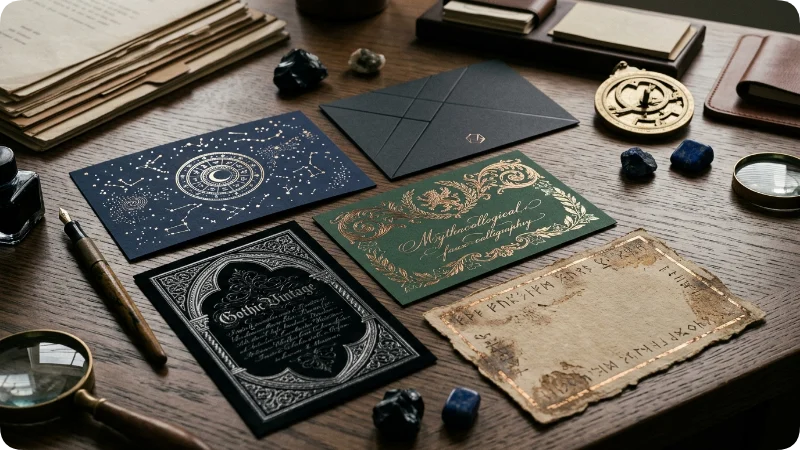
The best choice depends heavily on the atmosphere you want.
| If you want… | Consider |
| A literal word for death | Mṛtyu, Mors |
| Greek mythology | Thanatos, Hades |
| South Asian mythology | Yama, Kāla, Antaka |
| Ancient Egyptian imagery | Anubis, Osiris |
| Biblical/angelic darkness | Azrael, Samael |
| Ancient Near Eastern mythology | Mot, Nergal |
| Gothic vintage style | Mort, Mortimer |
| Celtic/Welsh fantasy | Arawn |
| Dark fantasy | Orcus, Thanatos |
| Death with renewal symbolism | Osiris |
| A powerful guardian feeling | Anubis, Azrael |
| A philosophical feeling | Kāla, Mṛtyu |
How to Choose a Male Name That Means Death
A death-related name can be fascinating, but the right choice depends on why you want the meaning.
For a baby name
Exercise more caution with names whose everyday meaning is literally “death.” A name such as Mṛtyu or Mors can be striking, but its meaning may be difficult socially outside the cultural or literary context in which it originates.
Names such as Yama, Arawn, Osiris, or Azrael can offer a more layered association, but their cultural or religious background should be understood before using them.
For a fictional character
This is where the darker options become much more flexible.
Thanatos suits a mysterious immortal or supernatural figure. Mors works beautifully for a concise gothic character. Mortimer can suggest an eccentric Victorian character, while Anubis immediately establishes an Egyptian mythological atmosphere.
For fantasy writing, meaning can also become part of characterization. A name connected with death might belong to someone who guards the dead rather than causes death, creating a more interesting contrast.
For a gamer tag or online identity
Short names usually work best.
Mors, Mort, Yama, Mot, and Orcus are visually strong and easy to remember.
For social media, gaming, or fantasy communities, the aesthetic impression may matter more than whether the name is suitable as an everyday first name.
What Do Death-Related Names Symbolize?
Death does not always have to represent something negative.
Across mythology and literature, death can symbolize change, transformation, endings, justice, rebirth, mystery, inevitability, or passage into another state.
That is why names such as Osiris can feel very different from Thanatos.
Thanatos represents the finality of death. Osiris introduces resurrection and continuity. Yama brings judgment and the realm of the dead. Anubis suggests guardianship and funerary protection.
This distinction gives you more creative control.
If you want a name that feels dark but not evil, consider Anubis, Osiris, Arawn, or Azrael.
If you want something severe and unmistakably death-related, Mṛtyu, Mors, Thanatos, or Mot make a stronger statement.
Lucky Numbers, Colors, Gemstones, and Zodiac Associations
Death-related names do not have scientifically established lucky numbers, colors, gemstones, days, or zodiac signs simply because of their meanings.
Online naming lists sometimes assign these attributes to names, but they are often based on numerology, modern name symbolism, or entertainment traditions rather than historical etymology.
For that reason, it is better not to present a lucky number or gemstone as an inherent property of Thanatos, Yama, Mors, or Anubis.
If you enjoy numerology, you can calculate a name’s number using a particular numerological system. That should be treated as a traditional or entertainment-based interpretation, not a factual characteristic of the name.
The same principle applies to zodiac signs and “lucky colors.” They can be fun additions to a character profile, but they should remain clearly separate from the verified meaning and origin of the name.
Are These Names Actually Suitable for Boys?
Some are genuine masculine personal names or historically used names, while others are primarily deity names, mythological figures, words, or literary names.
That distinction is important.
Yama, Arawn, Osiris, and Mortimer have stronger potential as actual personal-name choices depending on cultural context.
Thanatos, Mors, Mot, and Mṛtyu are much more unusual and may work better as character names or symbolic names.
Anubis, Hades, Nergal, and Orcus are primarily attractive because of their mythological identities rather than because they are conventional modern baby names.
If you are naming a real child, investigate the cultural context and everyday social implications before choosing a name simply because its meaning sounds powerful.
Best Male Names That Mean or Represent Death
After separating literal meanings from mythological associations, these are the strongest choices to keep in mind:
1. Mṛtyu — “Death”
The most direct Sanskrit choice, but exceptionally unusual as an everyday personal name.
2. Thanatos — “Death” / personification of death
Powerful Greek mythological choice with an unmistakably dark identity.
3. Mors — “Death”
A stark Latin option with an elegant, minimalist sound.
4. Yama — death and judgment
A culturally significant South Asian name associated with the dead and the afterlife.
5. Mot — death
An ancient Northwest Semitic mythological figure explicitly associated with death.
6. Kāla — time, with death associations
A philosophical Sanskrit choice emphasizing time and mortality.
7. Azrael — angel of death association
A celestial and mysterious option whose death connection comes from tradition rather than literal etymology.
8. Anubis — guardian of the dead
One of the strongest Egyptian death-associated names.
9. Hades — ruler of the underworld
Dark, regal, and instantly recognizable.
10. Osiris — afterlife and resurrection
Best for a death-related meaning that also suggests renewal.
11. Nergal — underworld, war, plague, destruction
Ancient and formidable Mesopotamian association.
12. Mortimer — historically connected with “dead sea”
The most vintage, conventional-sounding option among the darker choices.
Frequently Asked Questions
What male name literally means death?
Mṛtyu is the Sanskrit word for death, while Mors is the Latin word for death. Thanatos is the Greek word/name associated with death and the personification of death in Greek mythology.
What boy name means angel of death?
Azrael is traditionally associated with an angel of death in Jewish and Islamic traditions. The name itself should not be translated simply as “death,” because its etymological interpretation is more complex.
What male name is associated with the god of death?
Yama is strongly associated with death and judgment in Hindu and related Indian traditions. Hades is the ruler of the Greek underworld, while Anubis is associated with Egyptian funerary practices and the dead.
Is Thanatos a real name?
Yes. Thanatos is an ancient Greek name associated with the personification of death. Today, however, it is far more recognizable as a mythological name than as a conventional everyday first name.
Is Mortimer a name that means death?
Mortimer is traditionally interpreted from Old French/Norman elements associated with “dead” and “sea,” commonly rendered as “dead sea.” It therefore has a historical death-related element, although it does not simply mean “death.”
What is a good dark male name that does not literally mean death?
Arawn, Anubis, Azrael, Osiris, and Hades can work well when you want a darker atmosphere without choosing a name whose literal lexical meaning is “death.” Each comes with a different cultural or mythological context.
Final Thoughts
The most interesting male names that mean death are not necessarily the darkest-sounding ones. What makes a name memorable is often the story behind it.
Mṛtyu and Mors offer direct linguistic connections to death. Thanatos turns death into Greek mythology. Yama introduces judgment and the afterlife. Anubis suggests protection of the dead, while Osiris brings resurrection and renewal into the picture. Mortimer, meanwhile, gives the theme a completely different direction through its old-world, vintage character.
For a real person, cultural fit and everyday usability should come before shock value. For a fictional character, however, these names can become powerful tools for building personality, atmosphere, symbolism, and world-building.
The strongest choice is ultimately the one whose meaning, cultural background, sound, and emotional impression all support the character or person you are naming.