Choosing a boy’s name can feel surprisingly personal. You may want something rooted in Islamic or Muslim naming traditions, but you also want a name that sounds beautiful when spoken, carries a good meaning, and still feels right years from now.
That is where an A-to-Z list becomes useful. Instead of searching through hundreds of unrelated names, you can explore Muslim boy names A to Z, compare meanings and origins, and notice which letters and styles naturally speak to you.
Some names feel strong and dignified, such as Hamza and Zayd. Others have a softer, graceful quality, like Rayyan or Yusuf. Names such as Adam, Ibrahim, Maryam’s son Isa, and Muhammad also carry deep religious significance, while names like Ayaan and Zain have a more contemporary sound in many Muslim communities.
The important thing is not simply finding a name that looks good on a list. It is finding one whose meaning, cultural context, pronunciation, and personality feel right for your child.
Featured Snippet:
Muslim boy names A to Z include traditional Arabic, Persian, Urdu, Turkish, and other names used by Muslim communities around the world. Popular choices include Adam, Ali, Bilal, Danish, Hamza, Ibrahim, Idris, Musa, Omar, Rayyan, Yusuf, and Zayd. When choosing a Muslim name, consider its verified meaning, cultural or religious significance, pronunciation, spelling, and how naturally it fits your family.
Quick Guide to Muslim Boy Names from A to Z
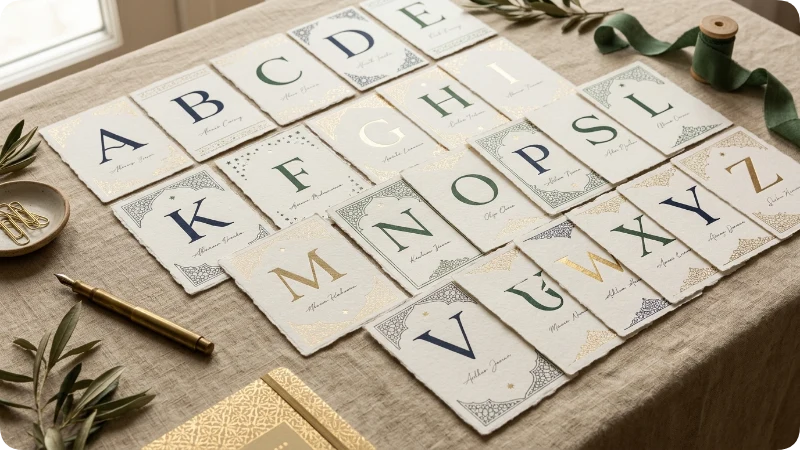
| Letter | Name Ideas | Style |
| A | Adam, Ahmad, Ali, Ayaan | Classic, spiritual, modern |
| B | Bilal, Basil, Burhan | Traditional, strong |
| C | Camil, Cem | International, less common |
| D | Danish, Dawud, Danyal | Elegant, intellectual |
| E | Ehsan, Elyas, Emir | Soft, international |
| F | Faris, Faisal, Furqan | Strong, refined |
| G | Ghazi, Ghalib, Gulzar | Bold, literary |
| H | Hamza, Hasan, Haris | Classic, powerful |
| I | Ibrahim, Idris, Ilyas | Biblical/Quranic, timeless |
| J | Jibril, Jamal, Jawad | Spiritual, elegant |
| K | Khalid, Karim, Kamil | Strong, sophisticated |
| L | Luqman, Latif, Laith | Distinctive, meaningful |
| M | Muhammad, Musa, Malik | Traditional, enduring |
| N | Nuh, Nasir, Nauman | Classic, strong |
| O | Omar, Owais, Osman | Familiar, traditional |
| P | Parvez, Parsa | Persian-influenced |
| Q | Qasim, Qadir, Qais | Distinctive, traditional |
| R | Rayyan, Rahim, Rafi | Modern, gentle, spiritual |
| S | Salman, Sami, Suleiman | Versatile, classic |
| T | Taha, Tariq, Talha | Islamic, strong |
| U | Umar, Usman, Uzair | Traditional |
| V | Vali, Vahid | Persian/Turkic influence |
| W | Waleed, Wasim, Waqar | Familiar, dignified |
| X | — | Very uncommon in traditional Muslim naming |
| Y | Yusuf, Yahya, Yasin | Quranic, timeless |
| Z | Zayd, Zain, Zakariya | Modern, classic |
Note: Muslim naming traditions are diverse. Not every name used by Muslims is exclusively Islamic in origin, and not every Arabic name is specifically a religious name. Cultural usage also varies between regions.
Muslim Boy Names Starting With A
The letter A offers some of the richest choices for Muslim families, from deeply traditional names to modern favorites.
Adam
Meaning: Often understood as “man” or connected with the human being; the name has a complex Semitic etymological history.
Origin: Hebrew/Arabic usage
Religious relevance: Adam is regarded as the first human and a prophet in Islam.
Pronunciation: AH-dam
Vibe: Timeless, gentle, dignified
Nicknames: Adam is usually used without shortening.
Similar names: Adnan, Ayman, Aydin
Ahmad
Meaning: “More praiseworthy” or “most praised” in traditional Arabic interpretation.
Origin: Arabic
Religious relevance: Ahmad is mentioned in the Qur’an in connection with the promised messenger and is traditionally associated with Prophet Muhammad.
Vibe: Reverent, classic, distinguished.
Ali
Meaning: “High,” “exalted,” or “noble.”
Origin: Arabic
Religious relevance: A major historical Muslim name, especially associated with Ali ibn Abi Talib.
Pronunciation: AH-lee
Vibe: Strong, concise, confident
Modern feel: Its short spelling makes it work particularly well internationally.
Other A choices include Aamir, Abbas, Abdullah, Abdulrahman, Adil, Ahsan, Akram, Ammar, Anas, Arham, Ayaan, and Aziz.
Muslim Boy Names Starting With B and C
Bilal
Meaning: Traditionally connected with freshness or moisture in Arabic etymology.
Origin: Arabic
Religious relevance: Bilal ibn Rabah was a prominent companion of Prophet Muhammad and the first muezzin according to Islamic tradition.
Vibe: Historic, warm, dignified.
Basil
Meaning: The Arabic name Basil is associated with bravery or courage.
Origin: Arabic
Pronunciation: BAH-sil in many Arabic contexts
Vibe: Refined and confident.
Burhan
Meaning: “Proof” or “evidence.”
Origin: Arabic
Vibe: Intellectual, serious, distinctive.
For C, genuinely traditional choices are much less common. Depending on the Muslim community, names such as Cem or Camil may appear through Turkish or regional usage. Families should verify the intended spelling, pronunciation, and cultural context rather than assuming that a C-spelling is simply an alternative form of an Arabic name.
Muslim Boy Names Starting With D and E
Danish
Meaning: Commonly interpreted as “knowledge,” “wisdom,” or “learning” in Persian usage.
Origin: Persian
Vibe: Intelligent, polished, modern-classic.
Dawud
Meaning: Arabic form of David.
Origin: Arabic/Hebrew religious tradition
Religious relevance: Prophet Dawud is mentioned in the Qur’an.
Pronunciation: Commonly rendered roughly as dah-WOOD
Vibe: Strong, prophetic, traditional.
Danyal
Meaning: Arabic/Persian form related to Daniel.
Religious context: Daniel has a long history in Jewish and Christian traditions; Muslim usage of Danyal varies by community and religious tradition.
Vibe: International, scholarly, elegant.
Ehsan
Meaning: “Excellence,” “goodness,” or “doing what is beautiful/good.”
Origin: Arabic
Religious relevance: Ihsan is an important Islamic ethical and spiritual concept.
Vibe: Gentle, thoughtful, spiritually meaningful.
Elyas
Meaning: Arabic form of Elijah/Ilyas.
Religious relevance: Prophet Ilyas is mentioned in the Qur’an.
Vibe: Soft, ancient, international.
Muslim Boy Names Starting With F and G
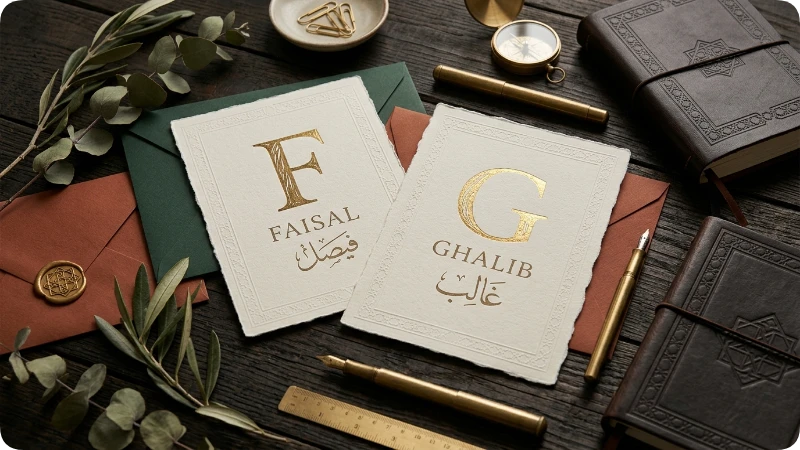
Faris
Meaning: “Knight” or “horseman.”
Origin: Arabic
Vibe: Brave, adventurous, masculine
Aesthetic: Romantic warrior / classic Arabic.
Faisal
Meaning: “Judge,” “decisive one,” or one who distinguishes between matters.
Origin: Arabic
Vibe: Authoritative, sophisticated, traditional.
Furqan
Meaning: “Criterion” or something that distinguishes truth from falsehood.
Origin: Arabic
Religious relevance: Al-Furqan is one of the names associated with the Qur’an and is also the title of Qur’an 25.
Vibe: Spiritual, serious, distinctive.
Ghalib
Meaning: “Victorious,” “overcoming,” or “prevailing.”
Origin: Arabic
Literary connection: The name is strongly associated with the celebrated Urdu poet Mirza Ghalib.
Vibe: Literary, cultured, confident.
Ghazi
Meaning: Historically associated with a warrior or one who participates in a military campaign.
Origin: Arabic/Ottoman and broader Muslim historical usage
Vibe: Bold and historical.
Muslim Boy Names Starting With H
H is particularly rich in names that sound strong while retaining warmth.
Hamza
Meaning: Traditionally associated with strength, firmness, or lion-like qualities in popular explanations; etymological discussions can be more nuanced.
Origin: Arabic
Religious relevance: Hamza ibn Abd al-Muttalib was the uncle of Prophet Muhammad and an important early Muslim figure.
Pronunciation: HAM-zah
Vibe: Brave, powerful, unmistakably masculine.
Hasan
Meaning: “Good,” “handsome,” or “excellent.”
Origin: Arabic
Religious relevance: Hasan ibn Ali was the grandson of Prophet Muhammad.
Vibe: Gentle strength and timeless elegance.
Haris
Meaning: In Arabic, Haris/Harith can relate to a cultivator, guardian, or one who earns/works, depending on the form and interpretation.
Vibe: Strong, familiar, practical.
Other choices include Hadi, Hakim, Hamid, Harun, Hashim, Huzaifa, and Hussain.
Muslim Boy Names Starting With I and J
Ibrahim
Meaning: Arabic form of Abraham.
Origin: Arabic form of a widely shared Semitic name
Religious relevance: Prophet Ibrahim is one of the most important prophetic figures in Islam.
Pronunciation: ib-ra-HEEM
Vibe: Deeply traditional, dignified, enduring.
Idris
Meaning: A Quranic prophetic name; its exact etymology is debated.
Origin: Arabic/Quranic usage
Religious relevance: Prophet Idris is mentioned in the Qur’an.
Vibe: Scholarly, refined, distinctive.
Ilyas
Meaning: Arabic form of Elijah.
Religious relevance: A prophet mentioned in the Qur’an.
Vibe: Ancient yet surprisingly modern-sounding.
Jibril
Meaning: Arabic form of Gabriel.
Origin: Arabic/Semitic religious tradition
Religious relevance: Jibril is the angel associated with delivering revelation to the prophets in Islamic tradition.
Vibe: Sacred, powerful, distinctive.
Jamal
Meaning: “Beauty.”
Origin: Arabic
Vibe: Warm, elegant, artistic.
Jawad
Meaning: “Generous” or “liberal in giving.”
Origin: Arabic
Vibe: Noble, warm, sophisticated.
Muslim Boy Names Starting With K and L
Khalid
Meaning: “Everlasting” or “eternal.”
Origin: Arabic
Historical association: Khalid ibn al-Walid was a famous early Muslim military commander.
Vibe: Strong, historic, commanding.
Karim
Meaning: “Generous,” “noble,” or “honorable.”
Origin: Arabic
Religious relevance: Al-Karim is one of the traditional names/attributes of Allah. As a personal name, Karim is widely used.
Vibe: Warm luxury, generosity, elegance.
Kamil
Meaning: “Complete” or “perfect” in Arabic usage.
Origin: Arabic
Vibe: Polished and intellectual.
Luqman
Meaning: A Quranic personal name; its exact linguistic etymology is uncertain.
Religious relevance: Luqman is associated with wisdom in Qur’an 31.
Vibe: Wise, calm, distinctive.
Latif
Meaning: “Gentle,” “kind,” or “subtle.”
Origin: Arabic
Vibe: Soft, refined, compassionate.
Laith
Meaning: “Lion.”
Origin: Arabic
Vibe: Strong, concise, modern.
Muslim Boy Names Starting With M
M contains some of the most recognizable names across Muslim communities.
Muhammad
Meaning: “Praised” or “frequently praised.”
Origin: Arabic
Religious relevance: The name of Prophet Muhammad, central to Islam.
Pronunciation: muh-HAM-mad, with regional variations
Vibe: Reverent, historic, enduring.
Musa
Meaning: Arabic form of Moses; the deeper etymology is associated with the ancient Semitic/Egyptian history of the name.
Religious relevance: Prophet Musa is one of the most frequently mentioned prophets in the Qur’an.
Vibe: Powerful, prophetic, timeless.
Malik
Meaning: “King” or “possessor,” depending on the Arabic form and context.
Origin: Arabic
Vibe: Regal, concise, confident.
Other M names include Mahmoud, Mahir, Majid, Mansoor, Marwan, Mustafa, Murtaza, and Muneeb.
Muslim Boy Names Starting With N, O and P
Nuh
Meaning: Arabic form of Noah.
Religious relevance: Prophet Nuh is an important prophetic figure in Islam.
Vibe: Minimalist, ancient, international.
Nasir
Meaning: “Helper,” “supporter,” or “one who gives victory/support.”
Origin: Arabic
Vibe: Strong and dignified.
Nauman
Meaning: A traditional personal name with historical Arabic usage; exact etymological interpretations vary.
Vibe: Classic and culturally familiar in South Asian Muslim communities.
Omar / Umar
Meaning: Connected to the Arabic root associated with life, flourishing, or long life.
Religious relevance: Umar ibn al-Khattab was a major companion and the second caliph in Sunni Islamic tradition.
Vibe: Strong, traditional, internationally recognizable.
Owais
Meaning: A traditional Arabic personal name.
Historical association: Uways al-Qarani is a well-known figure in Islamic tradition.
Vibe: Gentle, spiritual, distinctive.
Names beginning with P are uncommon in Arabic naming traditions. Parvez/Parviz and Parsa occur particularly through Persian usage. Their cultural and linguistic background should be considered rather than treating them as standard Arabic names.
Muslim Boy Names Starting With Q and R
Qasim
Meaning: “One who distributes” or “divider/distributor.”
Origin: Arabic
Historical/religious association: Qasim was a son of Prophet Muhammad.
Vibe: Traditional, dignified, understated.
Qadir
Meaning: “Capable,” “powerful,” or “able.”
Origin: Arabic
Religious context: Al-Qadir is among the divine attributes in Islamic theology; as a personal name, Qadir is used by Muslims.
Qais
Meaning: A classical Arabic personal name with a long literary history.
Literary association: Qays is famously connected with the Layla and Majnun literary tradition.
Vibe: Romantic, poetic, old-world.
Rayyan
Meaning: Traditionally understood as “well-watered” or “luxuriant.”
Religious relevance: In hadith literature, Ar-Rayyan is described as a gate of Paradise associated with those who fast.
Vibe: Soft, spiritual, modern.
Rahim
Meaning: “Merciful” or “compassionate.”
Origin: Arabic
Religious context: Ar-Rahim is a divine attribute in Islam; Rahim is also used as a personal name.
Vibe: Gentle, compassionate, dignified.
Rafi
Meaning: “Exalted,” “noble,” or “elevated,” depending on the Arabic form and context.
Vibe: Minimalist, elegant, sophisticated.
Muslim Boy Names Starting With S and T
Salman
Meaning: Commonly connected with safety, peace, or being sound in Arabic/Persian naming traditions.
Historical association: Salman al-Farisi was a prominent companion of Prophet Muhammad.
Vibe: Warm, mature, respected.
Sami
Meaning: “Elevated,” “lofty,” or “high,” depending on the Arabic form.
Vibe: Short, friendly, international.
Suleiman
Meaning: Arabic form of Solomon.
Religious relevance: Prophet Sulayman is an important figure in Islamic tradition.
Vibe: Regal, wise, timeless.
Taha
Religious relevance: Taha is the opening of Qur’an 20 and is traditionally used as a Muslim male name. Scholarly interpretations differ regarding whether it functions as a conventional personal name or belongs to the Qur’an’s disjointed letters.
Vibe: Spiritual, concise, modern.
Tariq
Meaning: “Night visitor” or “one who comes by night.”
Origin: Arabic
Religious/literary association: Al-Tariq is the title of Qur’an 86.
Vibe: Mysterious, strong, memorable.
Talha
Origin: Arabic
Historical association: Talha ibn Ubayd Allah was a prominent companion of Prophet Muhammad.
Vibe: Traditional, warm, distinctly Muslim.
Muslim Boy Names Starting With U and V
Umar
Meaning: Associated with life, flourishing, or longevity in Arabic naming traditions.
Historical association: Umar ibn al-Khattab is one of the most influential early Muslim figures.
Vibe: Strong, traditional, authoritative.
Usman / Uthman
Meaning: Uthman is an ancient Arabic personal name; commonly Latinized as Uthman or عثمان.
Historical association: Uthman ibn Affan was the third caliph in Sunni Islamic tradition.
Vibe: Historic, dignified, traditional.
Uzair
Meaning: Arabic form of Ezra.
Religious context: Uzair is mentioned in the Qur’an.
Vibe: Distinctive, compact, traditional.
For V, names are naturally limited because V is not a native Arabic initial sound. Muslim communities using Persian, Turkish, Central Asian, South Asian, or other languages may have culturally appropriate names beginning with V, such as Vahid in some transliteration systems.
Vahid
Meaning: “One,” “unique,” or “single.”
Origin: Persian/Arabic usage
Vibe: Sophisticated, uncommon, philosophical.
Muslim Boy Names Starting With W, X, Y and Z
Waleed
Meaning: “Newborn” or “newly born child.”
Origin: Arabic
Vibe: Warm, traditional, masculine.
Wasim
Meaning: “Handsome,” “graceful,” or “good-looking.”
Origin: Arabic
Vibe: Elegant and polished.
Waqar
Meaning: “Dignity,” “gravity,” or “seriousness.”
Origin: Arabic/Urdu usage
Vibe: Mature, dignified, sophisticated.
Traditional Muslim names beginning with X are extremely uncommon. The letter does not naturally occur as an initial in standard Arabic naming. If a family wants an A-to-Z list for creative purposes, it is better to acknowledge the gap than to invent an unsuitable “X” name or falsely label a non-Arabic name as Islamic.
Yusuf
Meaning: Arabic form of Joseph.
Religious relevance: Prophet Yusuf is one of the most beloved prophetic figures in Islamic tradition, and his story is narrated extensively in the Qur’an.
Pronunciation: YOO-suf, with regional variations
Vibe: Gentle, handsome, classic, spiritual.
Yahya
Meaning: Arabic form of John; the exact etymological history is connected to Semitic naming traditions.
Religious relevance: Prophet Yahya is mentioned in the Qur’an.
Vibe: Rare, graceful, deeply traditional.
Yasin
Religious relevance: Ya-Sin is the opening of Qur’an 36 and is widely used as a Muslim personal name. Scholarly discussion differs regarding its linguistic interpretation.
Vibe: Spiritual, familiar, concise.
Zayd
Meaning: “Increase,” “growth,” or “abundance.”
Origin: Arabic
Historical/religious association: Zayd ibn Harithah was a close companion of Prophet Muhammad and is mentioned by name in the Qur’an.
Vibe: Short, strong, modern.
Zain / Zayn
Meaning: “Beauty,” “grace,” or “adornment.”
Origin: Arabic
Vibe: Stylish, elegant, contemporary.
Zakariya
Meaning: Arabic form of Zechariah.
Religious relevance: Prophet Zakariya is mentioned in the Qur’an.
Vibe: Traditional, scholarly, distinctive.
Best Muslim Boy Names by Personality and Style
Sometimes the alphabet narrows your search, but personality makes the final decision much easier.
| Style | Name Ideas | Overall Impression |
| Strong | Hamza, Khalid, Tariq, Zayd | Bold and confident |
| Gentle | Rayyan, Rahim, Sami, Yusuf | Warm and approachable |
| Royal | Malik, Suleiman, Faisal | Regal and commanding |
| Spiritual | Ibrahim, Musa, Yusuf, Yahya | Deeply traditional |
| Short | Ali, Nuh, Sami, Zayd | Clean and memorable |
| Literary | Ghalib, Qais, Luqman | Cultured and thoughtful |
| Modern | Ayaan, Rayyan, Zain, Zayd | Fresh and stylish |
| Classic | Muhammad, Ahmad, Umar, Hasan | Enduring and familiar |
| International | Adam, Yusuf, Omar, Elias/Elyas | Easy to recognize across cultures |
| Distinctive | Idris, Luqman, Uzair, Jibril | Memorable without feeling invented |
These categories describe naming style and modern perception, not fixed personality traits. A name does not determine a child’s character.
How to Choose the Right Muslim Boy Name
A beautiful meaning is an excellent starting point, but it should not be the only consideration.
Start With the Meaning
Ask what quality you want the name to express. Perhaps you are drawn to Zayd because of its association with growth, Karim because of generosity, or Luqman because of wisdom.
Always distinguish a verified meaning from an attractive internet interpretation.
Consider Religious Significance
Some names have direct Quranic or prophetic associations, while others are simply Arabic or Persian names used by Muslims.
There is an important difference between:
- A Quranic name
- A name of a prophet
- A name associated with an important Muslim historical figure
- An Arabic name commonly used by Muslims
- A Persian, Turkish, Urdu, or other culturally Muslim-used name
Understanding this difference makes the choice more meaningful.
Say the Full Name Out Loud
A name can look beautiful on a screen but feel completely different when spoken.
Try saying:
First name + middle name + family name
Then repeat it naturally as if introducing your child. Listen for rhythm, pronunciation, and whether the combination feels effortless.
Think About Nicknames
Some parents love flexible names such as Muhammad → Hamza/Mo/Muhammad depending on family tradition, while others prefer names such as Zayd, Nuh, or Ali that already feel complete without shortening.
There is no universal rule. The best nickname is one that naturally develops within your family and culture.
Consider Spelling Carefully
Names can have several English spellings because Arabic, Persian, Urdu, Turkish, and other languages are transliterated differently.
For example:
- Omar / Umar
- Usman / Uthman
- Zain / Zayn
- Yasin / Yaseen
- Zakariya / Zakaria
- Dawud / Dawood
These are not always interchangeable in every linguistic or cultural context, so choose the spelling that best reflects your family’s language and pronunciation.
Traditional, Modern, and International Muslim Names
The best choice does not have to be either extremely traditional or extremely modern.
A name such as Ibrahim feels ancient and deeply rooted, yet it is perfectly usable today. Zayd has historical roots but also a clean, minimalist sound that fits contemporary naming tastes. Adam crosses religious and cultural boundaries while remaining familiar.
For parents wanting a modern Muslim aesthetic, names such as Rayyan, Zayd, Zain, Ayaan, Idris, and Elyas may feel especially appealing.
A more traditional South Asian Muslim feel may come from familiar choices like Muhammad, Abdullah, Usman, Umar, Hamza, Talha, and Huzaifa.
For an international family, Adam, Yusuf, Omar, Ali, Ibrahim, and Elyas can offer a useful balance between cultural identity and pronunciation across languages.
Lucky Numbers, Colors and Numerology: What to Know
Parents sometimes encounter Muslim names paired online with lucky numbers, gemstones, colors, weekdays, or zodiac signs.
These associations should be treated as cultural, traditional, numerological, or entertainment-based ideas—not established Islamic facts or scientific properties of a name.
For example, numerology websites may assign different numbers to the same name depending on the system used. Likewise, gemstone and zodiac associations can vary considerably.
If your priority is an Islamic naming tradition, give greater weight to:
meaning → religious/cultural context → pronunciation → family fit → personal preference
rather than choosing a name because a website claims that it guarantees luck.
Muslim Boy Names That Work Well as Sibling Sets
Sibling names do not need to rhyme or follow the same first letter. In fact, a shared cultural or stylistic feeling often sounds more natural.
With Muhammad
- Muhammad and Ibrahim
- Muhammad and Yusuf
- Muhammad and Hamza
- Muhammad and Zayd
Rayyan Pairings
- Rayyan and Zayd
- Rayyan and Idris
- Rayyan and Yusuf
- Rayyan and Sami
With Ali
- Ali and Omar
- Ali and Hasan
- Ali and Hamza
- Ali and Zain
With Adam
- Adam and Yusuf
- Adam and Ibrahim
- Adam and Rayyan
- Adam and Zayd
The goal is balance rather than matching too perfectly. Each child deserves a name that feels complete on its own.
Frequently Asked Questions
What are the best Muslim boy names from A to Z?
Some especially strong choices include Adam, Ahmad, Ali, Bilal, Danish, Hamza, Ibrahim, Idris, Luqman, Muhammad, Nuh, Omar, Rayyan, Yusuf, Zayd, and Zain. The best choice depends on meaning, cultural context, pronunciation, and family preference.
Which Muslim boy names are mentioned in the Quran?
Examples include Adam, Idris, Nuh, Hud, Salih, Ibrahim, Ismail, Ishaq, Yaqub, Yusuf, Ayyub, Musa, Harun, Dawud, Sulayman, Ilyas, Al-Yasa, Yunus, Zakariya, Yahya, Isa, and Muhammad. Some Quranic names have spelling variations across languages.
Is every Arabic name a Muslim name?
No. Arabic is a language, not a religion. Arabic names are used by Muslims, Christians, and people of other backgrounds. Similarly, Muslim communities use names from Persian, Turkish, Hebrew, Urdu, African, South Asian, and other linguistic traditions.
What is a good modern Muslim boy name?
Rayyan, Zayd, Zain, Ayaan, Idris, Elyas, and Adam can offer a modern feel while remaining connected to established naming traditions. “Modern” is subjective and can vary by country and community.
Which Muslim boy names have strong meanings?
Names such as Hamza have associations with strength, Karim with generosity, Zayd with growth, Faisal with decisiveness, Rahim with mercy, and Luqman with wisdom-related Quranic tradition.
Can I choose a non-Arabic name for a Muslim baby?
Yes. Muslim naming is not limited to Arabic. Muslim communities around the world have long used names from Persian, Turkish, Urdu, African, Central Asian, South Asian, and other cultural traditions. The important consideration is the name’s meaning, cultural context, and compatibility with your family’s values.
Final Thoughts on Choosing a Muslim Boy Name
An A-to-Z list can give you hundreds of directions, but the final choice usually comes down to a much smaller group of names that feel special.
Maybe Ibrahim feels timeless. Maybe Rayyan has the warmth you were looking for. Perhaps Zayd feels wonderfully simple, or Yusuf gives you the perfect combination of beauty, history, and faith.
Do not rush the final decision.
Say the name aloud. Check its authentic meaning. Look at its cultural and religious context. Consider how it works with your surname and siblings. Most importantly, choose a name that your family will be happy to carry and say with love for many years to come.